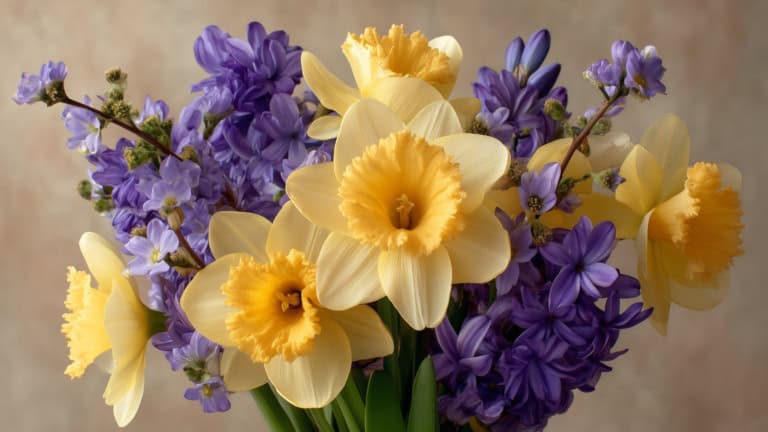
March birthdays feel like the year’s first real celebration. Winter is still hanging around, but the light is coming back and the season is clearly turning. That’s why March birth flowers make so much sense. Daffodils and jonquils are spring’s first cheerful way of saying, “Happy birthday, we’re back.”
If you’re here because you want to pick the right March bouquet, or you keep seeing “daffodil vs jonquil” and it all blurs together, let me make this simple and useful.
For march birth flowers inspiration, visit our March Birth Flower Guide.
Choosing March Birth Flowers
Choose the March birth flower based on the message you want to send, not just what looks pretty.
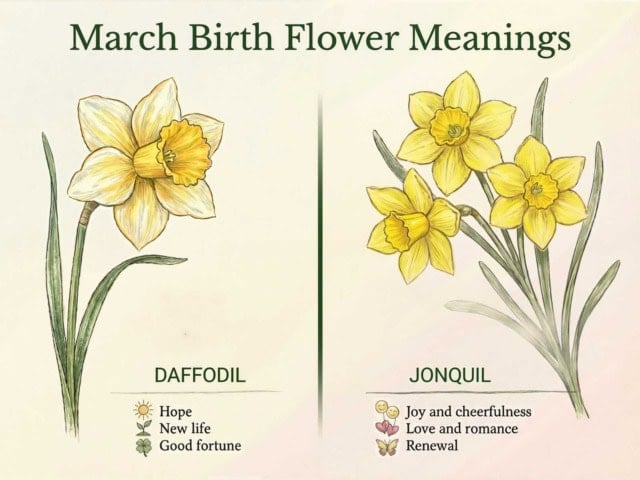
- Daffodils are the loud, bright, supportive friend. They communicate hope, renewal, resilience, and good fortune.
- Jonquils feel like the more subtle, personal choice. They still mean renewal, but they add joy, intimacy, and romance, mostly because their fragrance is stronger and their presence is softer.
People often treat jonquils as “a totally different flower,” but jonquils are technically a type of daffodil within the broader Narcissus genus. So having two March birth flowers is less about two unrelated blooms and more about two expressions of the same spring energy.
March Birth Flowers at a Glance
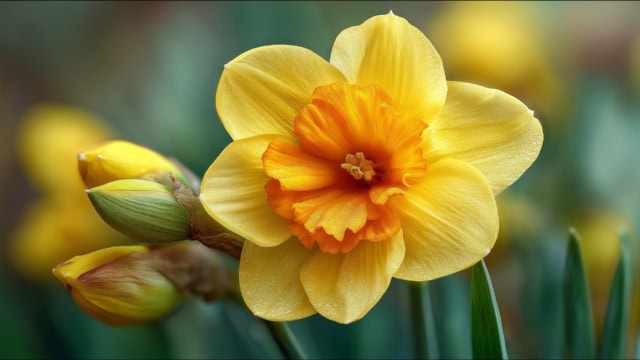
- Daffodils usually have one bloom per stem and a more obvious trumpet-shaped crown.
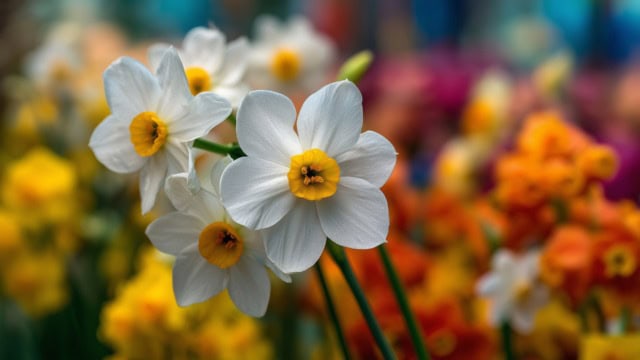
- Jonquils often have multiple smaller blooms per stem (3 or more), a shallower cup, and a stronger fragrance.
- Daffodils come in more colors (yellow, white, orange, pink, bi-colored).
- Jonquils are most often yellow.
- Both are Narcissus (they’re close relatives).
History And Cultural Notes
If you like your flowers with a little story attached, March delivers. Daffodils are believed to originate in the Mediterranean region, with roots traced back to ancient Greece and Rome. The name “narcissus” ties to Greek mythology: Narcissus falls in love with his own reflection and transforms into the flower that bears his name.
They spread across Europe, became popular ornamentals by the Middle Ages, and in the Victorian era they were associated with renewal and rebirth in floriography. European settlers later brought bulbs to colonial America.
Jonquils are closely tied to the broader Narcissus history, and are believed to originate particularly in Spain and Portugal, with the name derived from Spanish “jonquillo,” referencing those rush-like leaves.
Click here for inspirations on March’s birth flowers.
Daffodils: Renewal and Hope
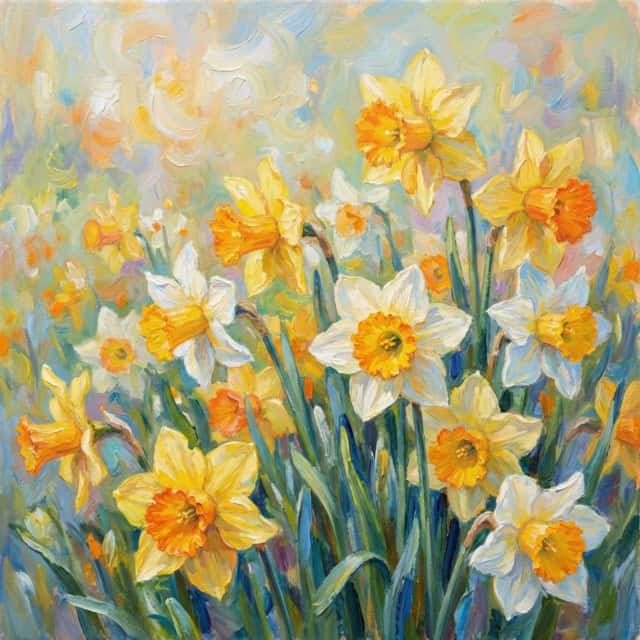
Daffodils have a talent for showing up exactly when people need them. Early spring. End of winter. That first bright pop of yellow or white that makes you believe the year might actually improve.
Daffodil Basics
The classic daffodil you’re picturing is part of the Narcissus genus (often called by its Latin name, Narcissus) and grows from bulbs planted in autumn. Daffodils are hardy perennials that return year after year, and the traditional look is:
- Six petals surrounding a trumpet or bell-shaped crown
- A crown that’s often frilled at the edge
- Most commonly yellow, white, or a combination
- Often a single bloom per stem
- Frequently seen in clusters, even when each stem carries one bloom
People generally assume daffodil is one specific flower. It’s not. Many flowers in the Narcissus genus get called daffodils, which is why it can get a bit confusing.
Daffodil Meaning
Daffodils are widely associated with:
- Hope
- New life
- Good fortune
- Rebirth and renewal
- Resilience and strength
They’ve also become a modern symbol of cancer awareness, representing hope for a cure and support for those affected. And they’re commonly linked with Easter, symbolizing resurrection and joyful spring energy.
Daffodils are traditionally given in a bunch for good luck and happiness, while a single daffodil is sometimes said to bring misfortune. I don’t live my life by flower superstition, but I do love how it gently nudges us toward generosity.
Jonquils: Sweet Fragrance and Joy
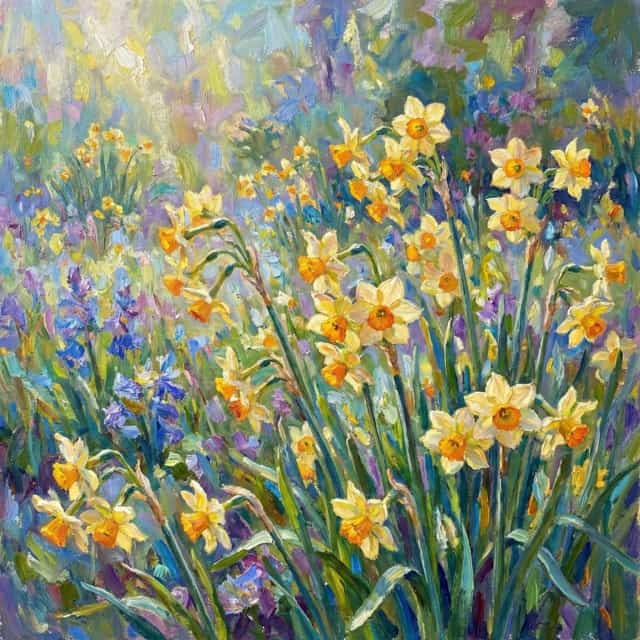
Jonquils have a quieter kind of charm. They’re still Narcissus, so they still carry that spring and renewal message, but their signature difference is the fragrance. It’s stronger and sweeter, which makes jonquils feel more personal.
Jonquil Traits
Jonquils (Narcissus jonquilla) are a specific subgroup within the larger Narcissus genus. Their name comes from the Spanish “junquillo,” meaning “little rush,” referring to their long, narrow, rush-like leaves.
Key identifying features:
- Multiple blooms per stem (often 3 or more)
- Blooms are smaller than a typical daffodil
- The cup is usually shallower than the classic daffodil trumpet
- Leaves are dark green, cylindrical, and rush-like
- They’re known for a stronger fragrance that carries farther
- Native to Spain and Portugal
- They tend to do well in warmer climates and may bloom slightly later than many daffodils
People often pick flowers by visuals alone, but with jonquils the real experience is scent. If the recipient loves fragrance, jonquil is doing extra work.
Jonquil Meaning
Jonquils often symbolize:
- Joy and cheerfulness
- Love and romance (their fragrance does not hide its intentions)
- Renewal and rejuvenation
- The anticipation of changing seasons
So yes, they overlap with daffodils. But jonquils tend to feel more intimate, less “spring is here!” and more “I’m glad it’s you.”
Daffodil vs Jonquil: Quick ID
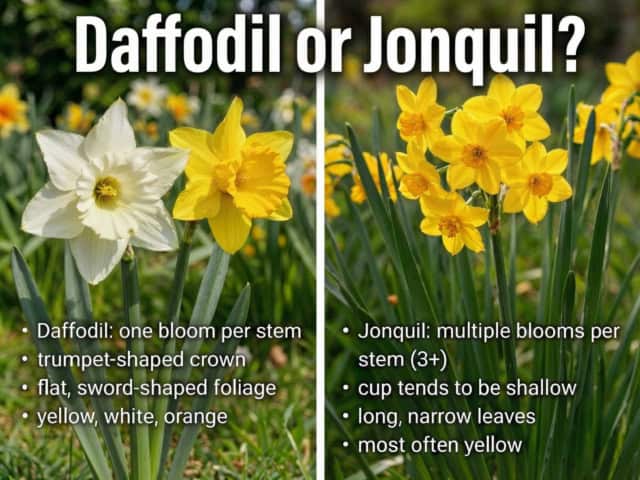
If you’re standing in front of flowers and trying to decide what you’re looking at, here’s the simplest set of clues:
Flower Count Per Stem
- Daffodil: typically one bloom per stem
- Jonquil: often multiple blooms per stem (3+)
Cup Shape
- Daffodil: trumpet-shaped crown is the star
- Jonquil: cup tends to be shallower
Leaves
- Daffodil: typically flat, sword-shaped foliage
- Jonquil: long, narrow, rush-like leaves (cylindrical and dark green)
Color Range
- Daffodil: yellow, white, orange, pink, bi-colored
- Jonquil: most often yellow
Scent
- Daffodil: usually mild
- Jonquil: noticeably fragrant
March Birthday Bouquet Picks
Here’s where the flower symbolism becomes practical.
When Daffodils Are The Better Gift
Choose daffodils when you want the message to feel:
- supportive
- bright
- upbeat
- hopeful
- “I’m cheering for you”
Their bright trumpets and spring association make them perfect for birthdays or moments when someone needs a boost.
When Jonquils Fit Best
Choose jonquils when you want the message to feel:
- more personal
- romantic
- close
- sensory and memorable
Their fragrance creates that feeling of closeness and desire. If you’re celebrating a March birthday for someone you love romantically, jonquils can say things daffodils cannot.
A helpful contradiction: daffodils are often treated as the “default” March flower, but if your recipient is scent-driven, jonquils can be the more emotionally accurate choice.
Pairing Ideas and Bouquet Care
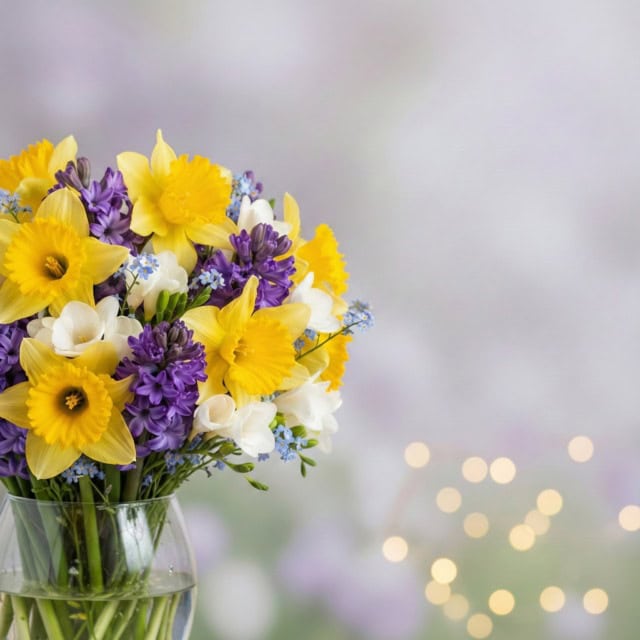
The March birth flowers are especially good in spring mixes, and they shine with complementary colors.
Pairing Suggestions
- Pair with purple hyacinths or blue irises for contrast
- Mix with tulips for a classic spring bouquet
- Build a vibrant spring centerpiece for gatherings
- Make a spring wreath to welcome guests
Basic Care
A few small habits make your bouquet last longer:
- Trim stems at an angle
- Remove leaves that would sit below the waterline
- Use a clean vase and fresh water
One important daffodil-specific note: daffodils continue to produce a toxin harmful to other flowers even after being cut. They don’t always play nicely in a mixed vase. So either let daffodils be the main character in an exclusive arrangement, or be intentional about how you combine them.
Fun Facts For March Birth Flowers
Daffodil Facts
- National flower of Wales, associated with St. David’s Day
- Traditional flower for a 10th wedding anniversary
- Immortalized by William Wordsworth in “I Wandered Lonely as a Cloud”
- Toxic to animals, which makes them a strong choice if deer, rabbits, squirrels, or rodents tend to snack in your yard
Jonquil Facts
- Jonquil essential oil is called “the perfume of the soul” in perfumery
- A superstition says if you point at a jonquil, it will not grow (flowers really said: mind your business)
- Jonquils come mostly in yellow
A Simple Takeaway
Daffodils and jonquils both capture what March feels like. Spring arrives, life restarts, and the mood lifts. They just express it in different ways.
If you want bright support, go daffodil. If you want joy with intimacy, go jonquil. If you can’t decide, combine them and let the bouquet carry both messages at once.
Whatever you choose, you’re not just giving flowers. You’re giving a small, living symbol that says: the season is changing, and I’m glad you’re here for it.